


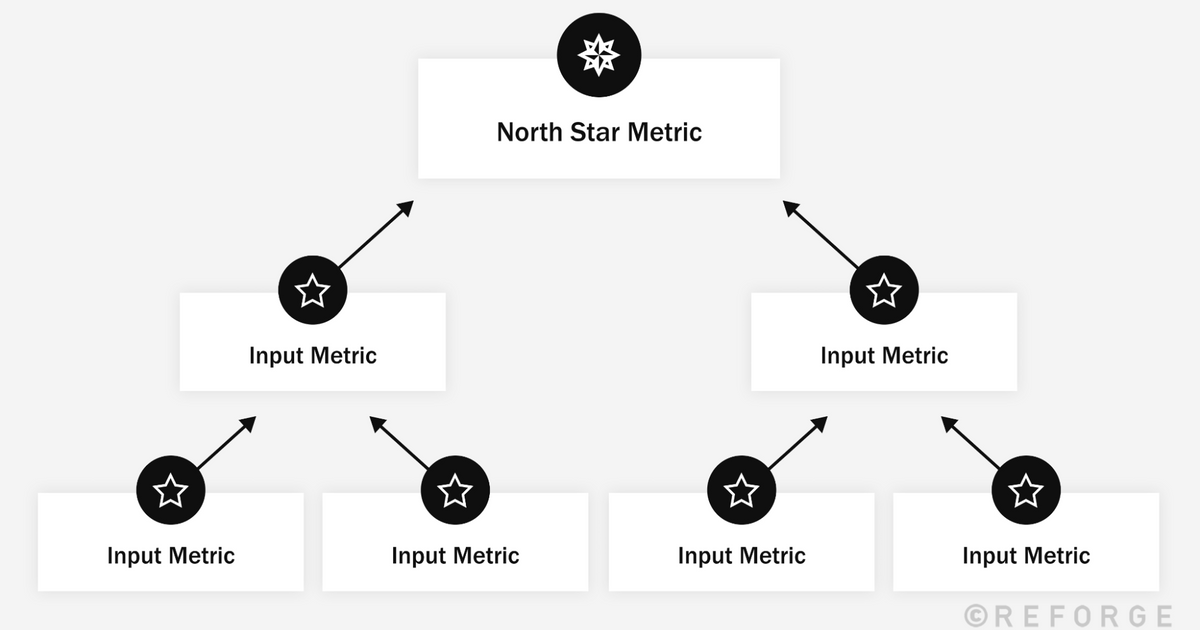
A North Star Metric (NSM) is the single most crucial metric that drives long-term growth for a businesses. North Star Metric helps companies align their teams towards a common goal, ensuring sustainable growth and value delivery to customers. The NSM represents the core value that a product provides to its users, making it a vital element in decision-making and strategic planning.
In the vast ocean of data and metrics, it’s easy to get lost. Clicks, likes, shares, website visits – they’re all important, but do they truly reflect your business’s overall success? That’s where the North Star Metric (NSM) comes in.
When starting a product or creating a new feature, it is important that the product team, including the managers and marketers come together to understand what the North Star Metric will be. This singular act can help improve and scale products faster than normal.
Note, there are different NSM for every industry and the NSM for E-commerce A might be different from E-commerce B. North Star Metric has to do with the present goal the company is trying to achieve at the moment.
Why is a North Star Metric so Important?
- Focus: In a world of abundant data, the NSM provides clarity. It helps teams prioritize their work and align their efforts towards a common goal. No more chasing vanity metrics that don’t contribute to long-term success.
- Alignment: The NSM acts as a unifying force, bringing different departments together. Whether you’re in marketing, sales, or product development, everyone understands how their work contributes to moving the NSM.
- Growth: By focusing on the NSM, you’re focusing on delivering core value to your customers. This, in turn, drives sustainable growth.
- Accountability: The NSM provides a clear measure of success. It allows you to track progress, identify areas for improvement, and hold teams accountable.
How to Identify Your North Star Metric
Finding the right NSM depends on your business model, industry, and goals. Here are key steps:
- Identify Core Value Proposition: What is the primary value your product or service delivers to customers? This is important to know before picking a north star metric, in fact, it helps you shape your North Star Metric. For instance, X formerly Twitter is a social media platform where people share their thoughts. Before picking a NSM, X must be able to serve that core purpose.
- Analyze User Behavior: After you have identified your value proposition, Look at how engaged users interact with your product and what actions indicate long-term value. Do they stay longer on your platform? Do they use more features more than others? Are they facing any friction on your platform? All these data are important in keeping your users.
- Determine Key Success Indicators: What metric best reflects your company’s growth and customer retention? Select the single metric that best captures the delivery of your core value. It should be a metric that is:
a. Measurable: You need to be able to track it accurately.
b. Attainable: It should be something you can realistically influence.
c. Specific: It should be clearly defined and unambiguous.
d. Time-bound: You should track it over a specific period.
Examples of North Star Metrics:
a. E-commerce: Number of repeat purchases per customer.
b. SaaS: Customer lifetime value.
c. Social Media Platform: Monthly active users.
d. Subscription Service: Subscriber retention rate.
Related: Read Mastering Sales through Storytelling
How to Contribute to NSM as a Marketer
Marketing professionals, including social media managers, content writers, and product marketers, play a vital role in influencing the NSM. Here’s how:
Social Media Managers:
- Engagement Optimization: Increase meaningful interactions, comments, and shares to drive user retention.
- Community Building: Create an active, engaged community around the brand to improve user loyalty.
- Content Strategy: Align social media content with NSM goals by promoting valuable user actions.
Content Writers:
- Educational and Value-Driven Content: Craft content that resonates with the audience and encourages long-term engagement.
- SEO Optimization: Ensure content ranks well to drive consistent organic traffic.
- Storytelling & Brand Voice: Use compelling storytelling to align with user needs and the brand’s value proposition.
Product Marketers:
- Data-Driven Campaigns: Use analytics to track what works best and optimize marketing efforts accordingly.
- Customer Journey Mapping: Understand how customers interact with the brand and identify key moments that contribute to NSM.
- Collaboration with Product Teams: Work closely with product and sales teams to ensure marketing strategies support the overall business goal.
Conclusion
The North Star Metric is a powerful tool for focusing your efforts and driving sustainable growth. By understanding your core value and identifying the single metric that best reflects it, you can align your teams, prioritize your work, and achieve your business goals. As marketers, you are essential in driving the NSM through targeted campaigns, valuable content, and a data-driven approach. So, find your guiding light, and let it lead you to success.










Leave a comment